Reach Every Ball: The Pickleball Footwork Drills That Will Transform Your Game
Let me tell you about Carlos.
Carlos is sixty years old. Not particularly fast. Not particularly athletic. But he gets to everything. Balls that should be winners? Carlos is there. Balls that seem impossible to reach? Carlos gets a paddle on them.
When I finally asked him his secret, he laughed and said two words: "Footwork. Drills."
He was right. The best pickleball players aren't necessarily the fastest or the most athletic—they're the ones who move most efficiently. They're balanced. They're positioned. They're ready.
If you've ever felt like you're always a step behind, lunging awkwardly for balls you should reach, or struggling to stay balanced during fast exchanges at the kitchen line, this post is for you. Based on the excellent drills in "Reach Every Ball With These Footwork Drills For Pickleball" from Patrick Plays Pickleball, we're breaking down exactly how to build footwork that will transform your court coverage.
Why Footwork Is the Foundation Everything Else Builds On
Here's the hard truth: you can have perfect paddle technique, flawless dinks, and powerful drives. But if you can't get to the ball, none of it matters.
Good footwork isn't just about reaching more balls—it's about:
- Staying balanced so you can hit consistent shots
- Setting up for the next shot before you even hit the current one
- Preventing injuries by avoiding awkward reaches and lunges
- Conserving energy so you're still moving well late in matches
As one coach put it: "If your footwork is on point, then every shot feels like it's in slow motion."
The Ready Position: Where Everything Starts
Before you can move, you have to be ready to move. And most recreational players—I was guilty of this too—stand completely wrong.
What Poor Ready Position Looks Like:
- Flat-footed, weight on your heels
- Knees locked straight
- Paddle hanging down by your side
- Stiff, upright posture
What Actually Works:
- Feet shoulder-width apart (maybe slightly wider)
- Weight on the balls of your feet—you should feel like you could spring in any direction
- Knees slightly bent in an athletic stance
- Hips back like you're sitting in a chair
- Paddle up and out in front, around belly button or chest height
Before every point, do a quick self-check: Am I on my heels? Are my knees locked? Is my paddle down? Fix it. It takes two seconds and makes a massive difference.
The Split-Step: Your "Go" Button
If you only master one footwork pattern from this entire post, make it the split-step. It's the single most important footwork skill in pickleball.
What It Is:
A small hop—just 2-3 inches off the ground—that puts you in an athletic position, ready to react in any direction.
The Critical Timing:
You want to land just as your opponent makes contact with the ball. Not before. Not after. Right at contact.
I used to split-step way too early. I'd hop, land, and then just stand there while my opponent hit. That's not helpful. The split-step should put you in position to react immediately.
Why It Matters:
Without a split-step, you're flat-footed. When the ball comes, you have to load up before you can move. By then, it's too late. The split-step pre-loads your legs, so your first movement is explosive and immediate.
Practice:
Have a partner hit balls to you. Split-step as they hit. Focus on landing at the moment of contact. Do this a hundred times. It'll feel weird at first—keep doing it until it's automatic.
The First Step: Where Points Are Won or Lost
Once you split-step and read where the ball is going, your first step determines whether you get there.
The Key Elements:
- Push off the opposite foot. Ball goes to your right? Push off your left foot.
- Stay low. Don't straighten up. Push off low and stay low.
- Be explosive but controlled. Quick, not long.
What I used to do wrong: I'd hesitate. I'd see the ball going wide and think "Can I get there?" while wasting precious milliseconds. By the time I decided to go, it was too late.
Now I just go. Commit immediately. Even if I'm not sure I can get there—go. Sometimes I'm wrong. But more often than not, I get to balls I thought were impossible.
Essential Footwork Patterns for Every Situation
The Shuffle: Your Bread and Butter at the Kitchen Line
When you're at the non-volley zone moving laterally, use the shuffle. This is the most effective way to stay centered, keep the ball in front of you, and maintain compact swings.
How to do it:
- Push off the foot on the side you're moving toward
- Slide the other foot to meet it
- Stay low throughout
- Never cross your feet (except for a quick crossover on your backhand side when absolutely necessary)
- Keep facing the net
The shuffle keeps your hips and shoulders square to the net, which is critical for quick reactions. Every time your body turns away, it takes extra time to recover to the ready position.
The Crossover Step: When You Need Extra Reach
Sometimes the shuffle isn't fast enough—especially when your opponent hits a wide dink to your backhand.
When to use it: Short, wide dinks to your backhand side. For deeper balls, stick to a shuffle or drop step.
How it works:
- Cross your dominant foot over your non-dominant foot to gain reach
- Your paddle arm and foot move together, naturally following your stride
- Use this selectively—it's an advanced move that temporarily turns your body
The Drop Step: Defending Without Retreating
This is the move that separates advanced players from intermediates. When you need to handle a tough shot without giving up your position at the kitchen line, use the drop step.
How to execute:
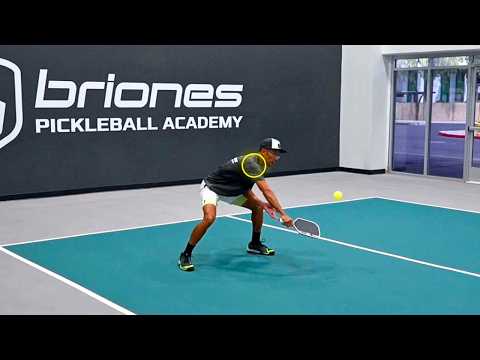
- Take a small step back at a 45° angle with your hitting foot (right foot for right-handers)
- Hit your shot from this position
- Immediately slide your foot forward to regain your position at the line
This controlled movement gives you extra time and space to handle low, fast, or off-balance shots while maintaining your aggressive court position.
Putting It All Together: Drills You Can Do Today
Here are three drills to build these patterns into muscle memory:
Drill 1: Split-Step Timing
Have a partner hit balls to you from across the net. Your only job is to split-step at the moment they make contact. Don't worry about hitting the ball—just focus on the timing. Do 20 repetitions.
Drill 2: Sideline Shuffles
Stand at the center of the kitchen line. Shuffle to the right sideline. Touch the line. Shuffle to the left sideline. Touch the line. That's one rep. Do 10 reps. Time yourself—goal is under 10 seconds.
Drill 3: Hit and Recover
Rally with a partner. After every shot you hit, immediately recover to the center of your side. Have your partner try to move you around the court. Focus on quick recovery—don't admire your shots.
The Real Secret
Carlos taught me something that changed my game forever: "The players with the best footwork often win, even if they don't have the best technique. Because you can't hit what you can't reach."
Footwork is trainable. Unlike raw speed (which is genetic), footwork patterns can be learned and improved with deliberate practice. You don't need to be faster than everyone else—you just need to be more efficient.
Dedicate time to these drills. Practice the patterns until they're automatic. Your game will thank you.
Watch the Full Video
Want to see these drills in action? Check out the full video from Patrick Plays Pickleball:
🎥 Reach Every Ball With These Footwork Drills For Pickleball
Patrick Plays Pickleball creates videos to help players—especially senior players—better their game with simple but useful pickleball tips.